
Highlights from the first forty years of the company’s history
rd electronic’s first custom-developed products were synchronization units based on the DCF77. These were used, for example, to synchronize seismic measurements covering large geographical areas or to align flight paths for tornado jet fighters at the German Armed Forces’ test sites. This was followed by IRIG‑B time signal encoders for recording satellite-based data (Meteosat) and for synchronizing spatially separated measurements of all kinds.
By the way, you can see the IRIG‑B encoder from rd electronic GmbH at Deutschen Museum von Meisterwerken der Naturwissenschaft und Technik (short: Deutsches Museum) in Munich.
MS-256 (1981–1990)
This device marked the entry into multiprocessor-based measurement technology on networked systems. It was an innovative new development in parallel, multi-channel real-time measurement technology in networked units, each with 8 analog or 16 digital channels. With up to 32 participants, parallel-operating measurement units with a total of 256 digital or analog measurement channels could be operated in a centrally readable network. The devices were primarily used in the energy sector and for surveying large-scale facilities, such as the solar and hydrogen plant in Neuerburg vorm Wald, as well as for air separation units, bridge surveys, and energy measurements of first-generation wind and solar power plants. Major customers included BMW, Linde, AEG, Siemens, and FFE.
TDS100 (1990–2000)
This series of devices represented a further development of mobile, battery-powered measurement units featuring a total of 6 analog and 16 digital inputs, all galvanically isolated from one another. The TDS100 marked the beginning of fleet measurement technology in synchronized large-scale trials during the development of vehicles by the German automotive industry. A distinctive feature of this small, mobile, and energy-efficient real-time measurement technology was its multisensor inputs. These enabled the measurement of voltage, current, and resistance, thereby allowing the connection of a wide variety of sensors using two‑, three‑, and four-wire technology. A newly developed synchronization method enabled the calibration of all freely movable measuring devices via specialized readout software. In total, up to 120 measuring devices in a large-scale test could be synchronized to 200 µsec. The system was also used in the surveying of the Airbus A380 wings.
Diagnostic and I/C Bus Monitors (1993–2005)
In addition to standard test equipment, bus monitoring methods were developed and tested specifically for monitoring diagnostic interfaces in vehicles. Bus monitors are now being used in the emerging field of vehicle control unit network simulation (ECU Networks), in troubleshooting production facilities and processes, in field operations in general, and in automotive repair shops.
TDS E1590 (1995–2010)
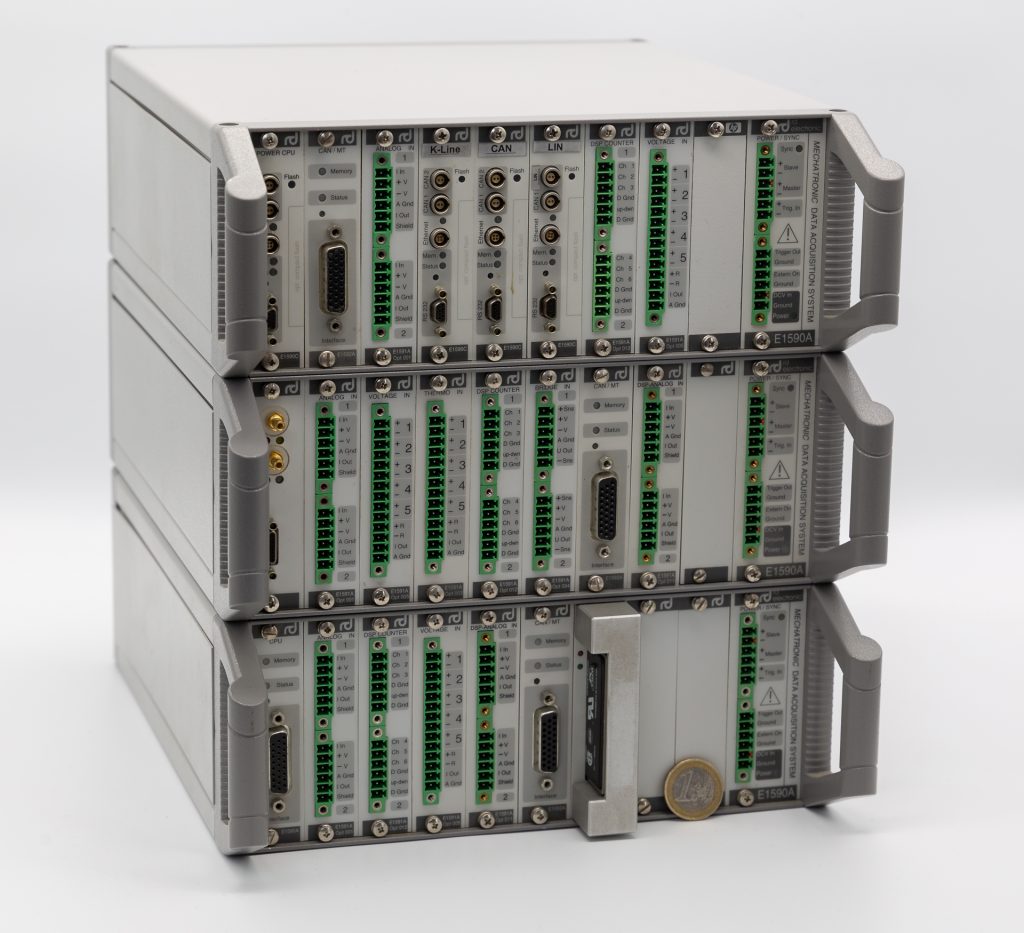
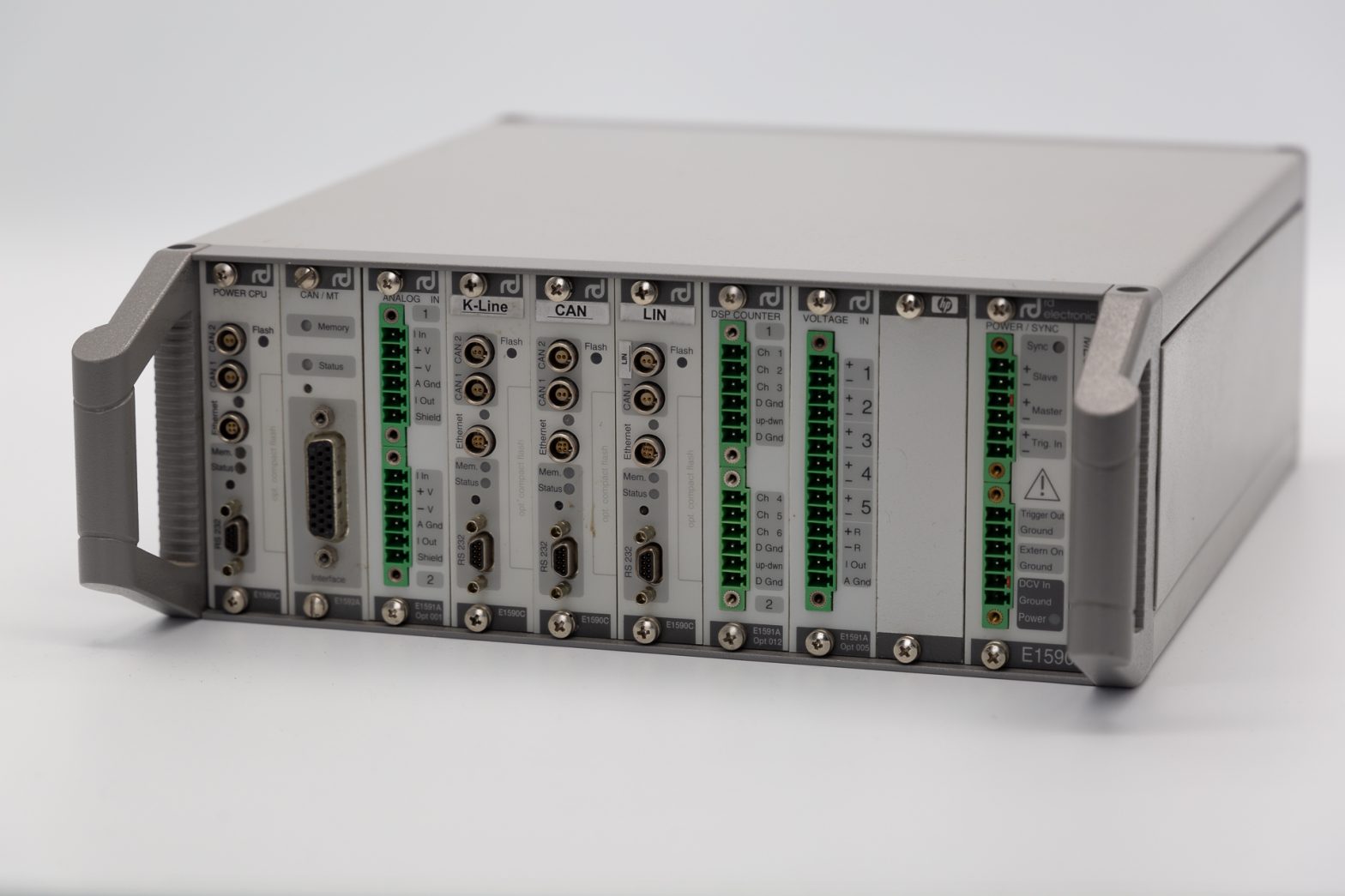
Following the TDS256, the TDSE1590 was developed as a compact, modular, ½‑19-inch, 2U variant. In addition to the individually galvanically isolated multi-sensor inputs used here as well, DSPs were employed for the first time. In addition, parallel bus inputs for various vehicle communication systems could be acquired in real time via up to 8 input cards (analog, digital, I‑Bus, K‑Bus, diagnostic bus, CAN bus, MOST). Furthermore, multiple units could be networked and synchronized via Ethernet. The system also provided space for hard disk storage for autonomous long-term measurement.
OEM
In particular, the TDS E1590 was licensed by measurement technology manufacturers and brought to market (Hewlett Packard, Dewetron, Kistler, T‑Systems, Kayser-Threde, etc.). This also led to the development of additional application-specific device modules for connecting measuring wheels, battery monitoring (U‑Bat), or special in-vehicle communication systems. Based on extensive experience in the development and manufacture of parallel, real-time measurement technology, a measurement system with up to 200 channels was developed for installation in vehicle crash dummies for the company Kayser-Threde. The unique feature was the requirement for measurement data acquisition synchronized to 20 µsec across all channels, local storage of the measurement data, and networking via USB. This allowed subnetworks with multiple channels (limbs, head, etc.) to be separated from the network and used or calibrated individually.
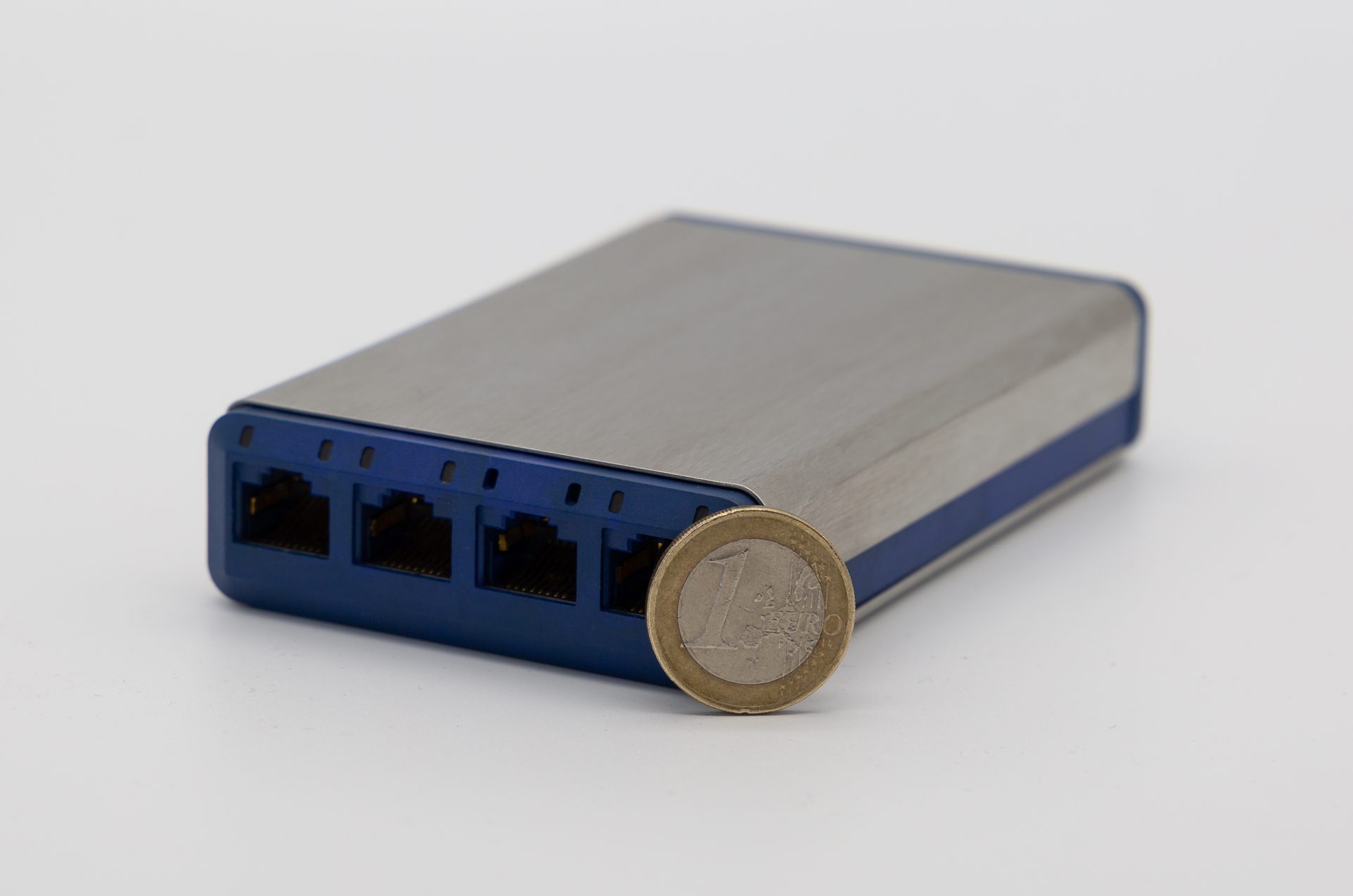
The Malibu System was developed as an OEM multi-sensor, four-channel measurement system for HBM. In addition to miniaturization and galvanic channel isolation, the size and housing design—featuring an integrated connector—were key elements of the measurement device family licensed by HBM.